

In today’s always-connected workplace, taking time off can feel like an uphill battle. Emails, client calls, and deadlines often follow us everywhere, leaving little room to recharge. But the reality is this: rest isn’t just a luxury, it’s a necessity for sustained performance and leadership success.
The good news? With proper planning and a professional out of office (OOO) message, you can truly unplug, protect your time away, and return with renewed energy.
Table of Contents
Why Out of Office Messages Matter
An out of office message is more than just an automated email. It’s a leadership tool. It communicates three essential things:
- Availability: Letting others know you’re not currently reachable
- Return date: Setting expectations for when you’ll respond
- Alternate contact: Directing urgent matters to someone who can help in your absence
Without one, colleagues or clients may assume you’re ignoring them, leading to confusion or missed opportunities. With one, you signal professionalism, foresight, and respect for others’ time. It also reinforces trust, showing that even in your absence, responsibilities are accounted for.
Best Practices for Writing a Clear Out of Office Message
When writing your out of office message, keep it simple and professional by leaving out unnecessary personal details.
A concise message is easier to read and more effective. It’s also important to set realistic expectations by avoiding promises to respond immediately upon your return. Give yourself a day or two to catch up.
If urgent matters need to be addressed, provide an alternate contact, but only if that person has agreed to step in.
Tailor your message depending on the audience. For internal colleagues, you may include more detail about your availability, project updates, or how your team should proceed, while for external contacts, keep the response short, professional, and focused on who to reach in your absence.
Always include your return date so people know when to expect a reply, and if you work with international teams, consider adding time zone details to prevent confusion.
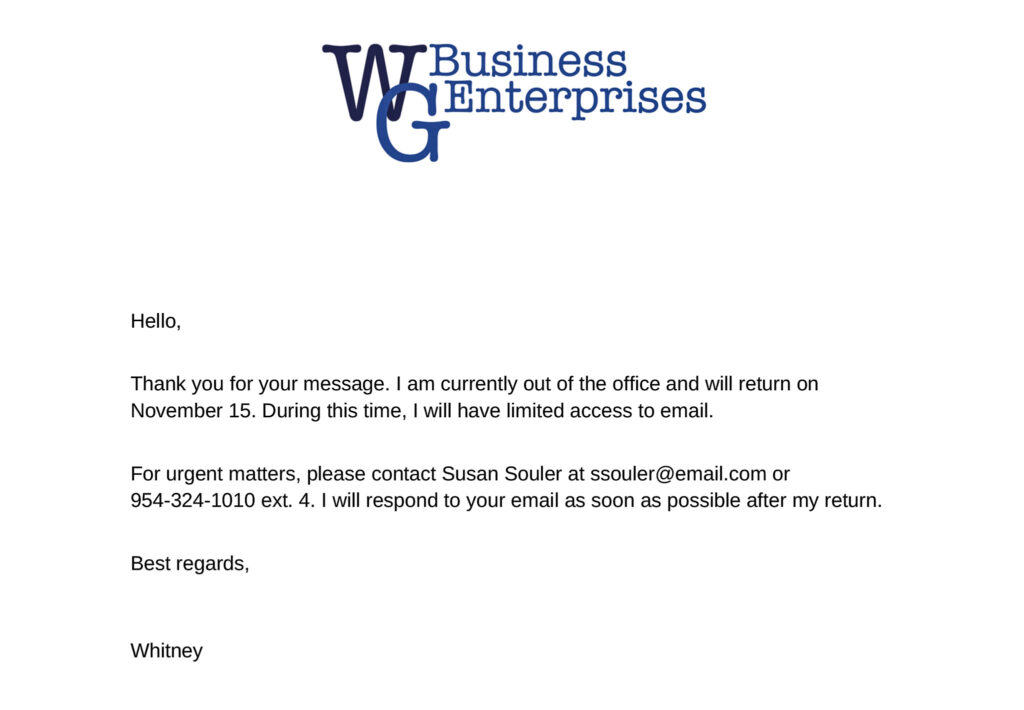
Example of a Professional Out of Office Message
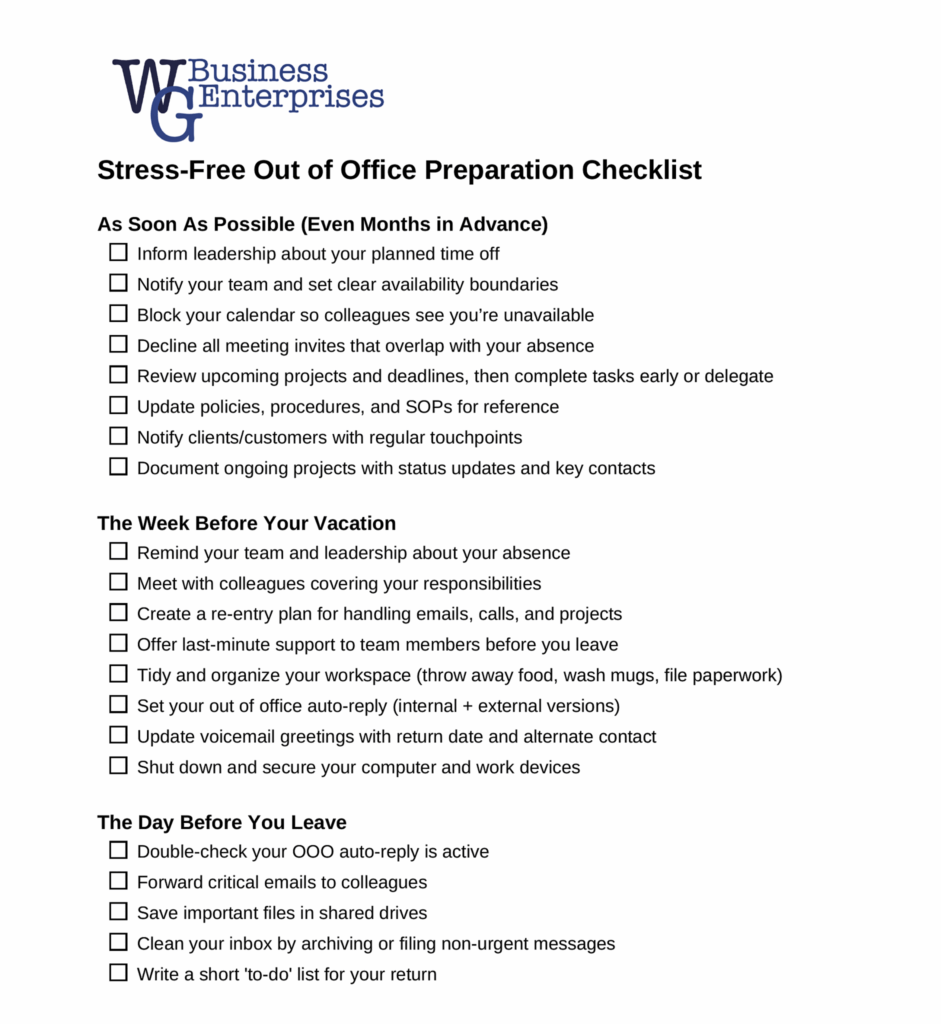
OOO Checklist
A great message is important, but preparation is where the real peace of mind happens. Use this checklist to ensure smooth operations while you’re away.
Tips for a Stress-Free Return
The real challenge of time away from the office isn’t just leaving, it’s coming back. Many professionals dread the mountain of emails, meeting requests, and project updates that pile up during their absence.
However, with a little planning, you can ease back into work without feeling overwhelmed.
Start by blocking your calendar for at least the first half-day, if not the whole day, to give yourself space to catch up on emails, check in with your team, and prioritize tasks before diving into meetings.
When tackling your inbox, don’t attempt to answer every message at once; instead, scan for urgent items, delegate where possible, and flag non-urgent emails for later.
It’s also helpful to schedule a quick debrief with the colleagues who covered for you so you can get up to speed on what happened in your absence. As you reorient, avoid overloading your first day back with major deadlines, focus on high-priority tasks and ease into projects gradually.
Finally, take care of yourself. Travel and transitions can be exhausting, so stay hydrated, get plenty of rest, and pace yourself as you re-enter work mode.
Advanced Out of Office Tips
If you want to take your out of office preparation to the next level, consider these additional tips:
- Use calendar sharing: Mark your OOO dates as “busy” on your shared calendar. This prevents others from scheduling meetings during your absence.
- Leverage collaboration tools: Platforms like Slack, Microsoft Teams, or Asana allow you to post updates, set statuses, and hand off tasks before leaving.
- Create a “while I was away” summary: Ask your coverage team to keep a running list of decisions, updates, and key events. Reviewing one document is easier than digging through dozens of emails.
- Automate where possible: If you handle recurring tasks, set up automated reminders, reports, or workflows to run while you’re gone.
- Customize your OOO message for different audiences: For example, you might want a more detailed message for internal colleagues and a shorter, polished one for clients.
Common Mistakes to Avoid
Even the best-prepared professionals sometimes make mistakes with their out of office planning. Avoid these pitfalls:
- Forgetting to set your OOO reply – It happens more often than you’d think! Always double-check before leaving.
- Over-sharing personal details- You don’t need to tell clients you’re going to the beach or visiting family. Keep it professional.
- Failing to notify key stakeholders-Don’t assume people will “figure it out.” Proactive communication prevents confusion.
- Not securing sensitive information- Leaving confidential files or your computer unlocked can expose your organization to risk.
- Over-promising on your return – Saying you’ll reply “immediately” after you’re back sets unrealistic expectations.
FAQs For Out of Office Messages
1. Should I include a phone number in my OOO message?
Generally, you should avoid sharing your personal cell phone number. The purpose of an out of office message is to set boundaries and protect your time away. If urgent matters must be addressed, it’s better to provide a colleague’s work contact (with their consent) or a main office number instead.
2. What if I don’t have a colleague to list as an alternate contact?
In this case, simply let people know you’ll respond when you return. If possible, provide a general company email or phone number for urgent inquiries.
3. Can I use humor in my out of office message?
It depends on your audience and company culture. A light, friendly tone can work well internally, but external messages should remain professional.
4. How far in advance should I start preparing?
Ideally, at least a few weeks ahead, especially if you manage projects or clients. For longer absences, start planning months in advance.
5. Should I set different OOO messages for different groups?
Yes. Internal and external audiences often need different details. Most email systems allow you to set multiple rules for auto-replies.
Final Thoughts & Next Steps

Taking time away from work is not a privilege, it’s a necessity. Rest, recovery, and quality time with loved ones are essential for long-term productivity and well-being. By writing a clear out of office message and following a thorough vacation preparation checklist, you can step away confidently, knowing your team and clients are supported.
Remember:
- A professional OOO message sets expectations.
- Early preparation reduces stress.
- A thoughtful re-entry plan makes your return manageable.
Vacations are meant to be enjoyed, not filled with worry about unanswered emails. With the right planning, you’ll return refreshed, recharged, and ready to tackle new challenges.
For more insights, check out our related posts on Mistakes New Businesses Make in the First 5 Years and Outsource Project Management.
Ready to Optimize Your Business?
Is your business set up to run smoothly even when you step away? Don’t wait until your next vacation to find out.
Contact us today for a free consultation and discover how we can help your business thrive, whether you’re in the office or out.

Click the button below, to book your free discovery call.
Serving West Palm Beach, Palm Beach County, and clients across the United States.
Free Business Resources & E-books:
Free Guide to SMART Goals for Businesses
Free Guide to Optimizing Your Business
Free Guide to a Hassle-Free Office Move
Visit us on Social